
.avif)
Most firearms and tactical businesses assume their biggest marketing problem is traffic.
It usually is not.
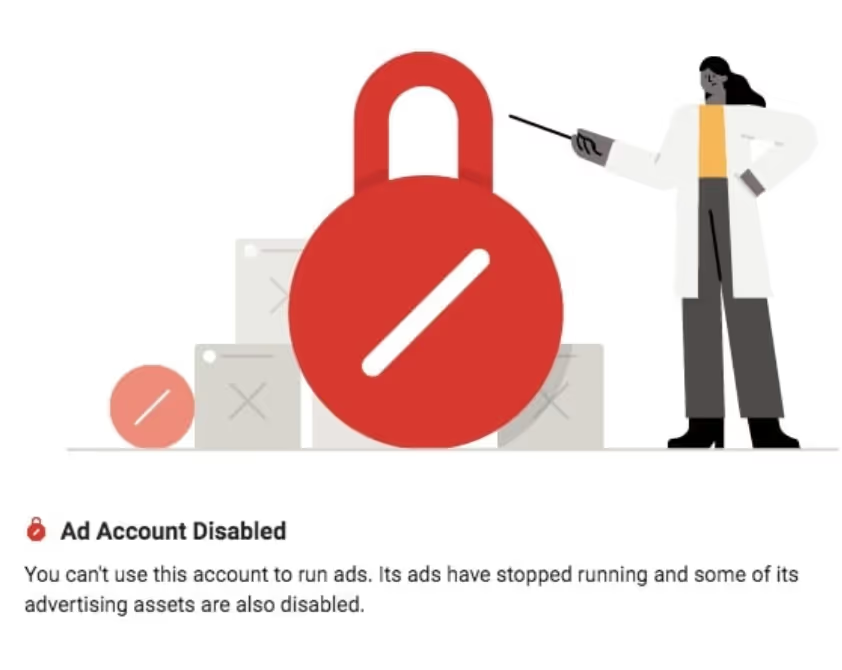
The real problem is that nearly every modern advertising platform makes it difficult, expensive, or outright impossible to sell firearms related products directly. Ads get rejected. Accounts get flagged. Appeals go nowhere. Even educational products and training tools can be swept up by automated enforcement systems.
As a result, many brands either stop advertising altogether or limp along with inconsistent results.
But this challenge is not new.
Long before Meta, Google, or automated ad reviewers existed, marketers faced similar constraints. Entire categories of products could not be advertised directly in mainstream media. The solution that emerged then is the same one that works now.
It is called the invisible sales letter.
The Invisible Sales Letter Is Not New
The invisible sales letter is not a modern hack or workaround created to exploit advertising loopholes.
It is a direct descendant of a much older concept called the advertorial.
Advertorials became popular decades ago in newspapers and magazines. Certain products could not be advertised directly, either because of regulations, editorial standards, or public sensitivity. Instead of running a traditional advertisement, companies paid for what looked like an article.
These advertorials were written to educate, inform, or tell a story. They explained a problem, explored why it mattered, and then introduced a solution naturally within the content. The selling was subtle. The persuasion happened through logic and credibility rather than hype.
Readers did not feel like they were being pitched. They felt like they were being informed.
That distinction mattered then, and it matters even more now.
In many ways, the invisible sales letter is simply the modern, digital evolution of the advertorial. The medium has changed, but the psychology has not.
What Makes an Invisible Sales Letter Different Today
Traditional advertorials lived in third party publications. Newspapers, magazines, and trade journals controlled distribution. Brands rented attention.
An invisible sales letter usually lives on a website. Often it lives on the brand’s own site, though in some cases it is hosted on a trusted industry authority or partner site.
The defining characteristics are not about where it lives, but how it functions.
An invisible sales letter looks like a blog post or educational guide. It delivers real value. It addresses a legitimate problem. It builds understanding and trust. It does not present itself as a sales page.
And yet, by the time a reader finishes it, they are already mentally aligned with the solution being offered.
They may not even realize a sales decision is forming until they click through.
That is why it works so well in the firearms and tactical industry.
Why Firearms and Tactical Businesses Benefit More Than Most
Advertising platforms are not hostile to firearms businesses. They are hostile to transactions involving regulated or sensitive items.
That distinction is critical.
Educational content is almost always easier to approve than product sales pages. Blog posts, guides, and training articles are generally allowed, provided they do not directly sell restricted products.
An invisible sales letter takes advantage of this reality.
Instead of sending traffic directly to a firearm, accessory, or training device, traffic is sent to an educational asset that exists within platform guidelines. That page does not sell anything directly. It does not process payments. It does not violate policy.
Its job is to pre sell.
By the time a reader reaches the actual product site, they are no longer cold traffic. They understand the problem. They agree with the solution. They are emotionally and logically prepared to buy.

The Invisible Sales Letter as a Traffic Bridge
One of the most powerful aspects of an invisible sales letter is that it acts as a bridge between paid traffic and restricted products.
Advertising platforms evaluate the destination URL first. If that page is compliant, traffic flows. The platform rarely evaluates what happens after a user clicks again on their own.
This allows firearms and tactical brands to scale traffic to a compliant page while still benefiting from downstream conversions.
The invisible sales letter does the heavy lifting. The product page simply closes the loop.
Case Study: Using an Invisible Sales Letter for DryFireMag
A clear example of this strategy in action comes from our work with DryFireMag.
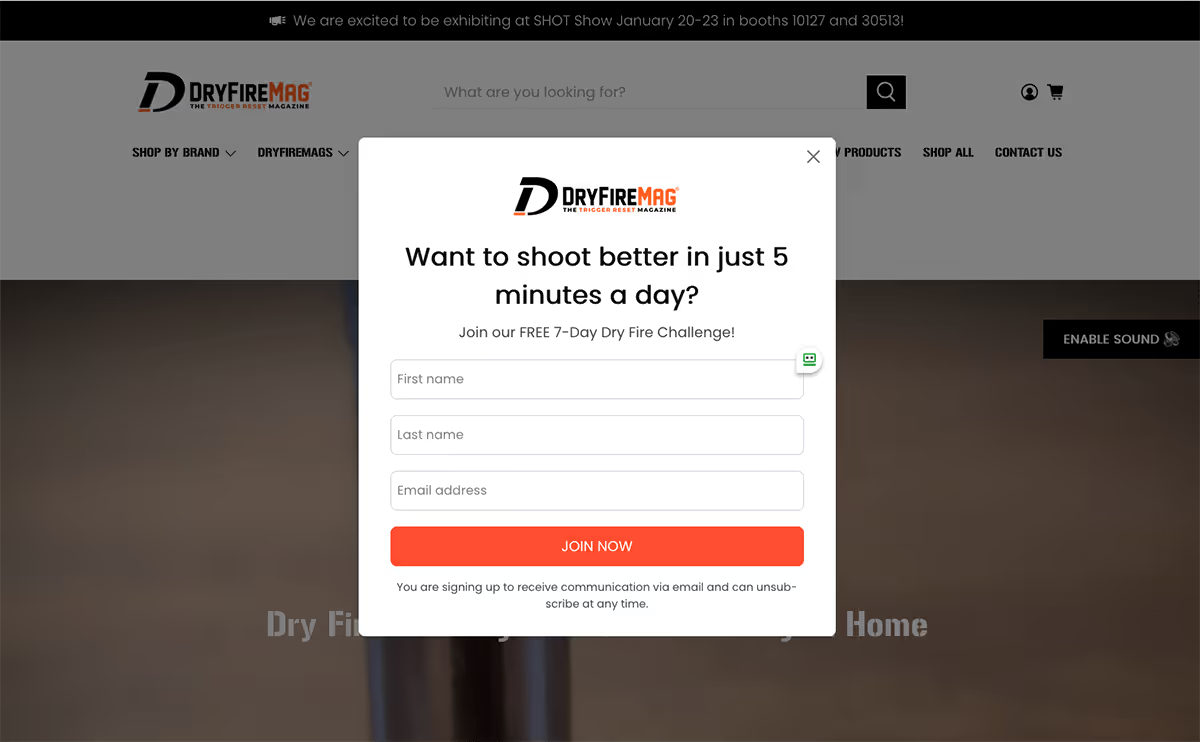
DryFireMag produces a training device that modifies the function of a firearm during dry fire practice. Because of this, Meta advertising policies consistently flagged and rejected ads that linked directly to their website.
The product itself was not the problem. The destination was.
Rather than fighting the platform, we changed the structure.
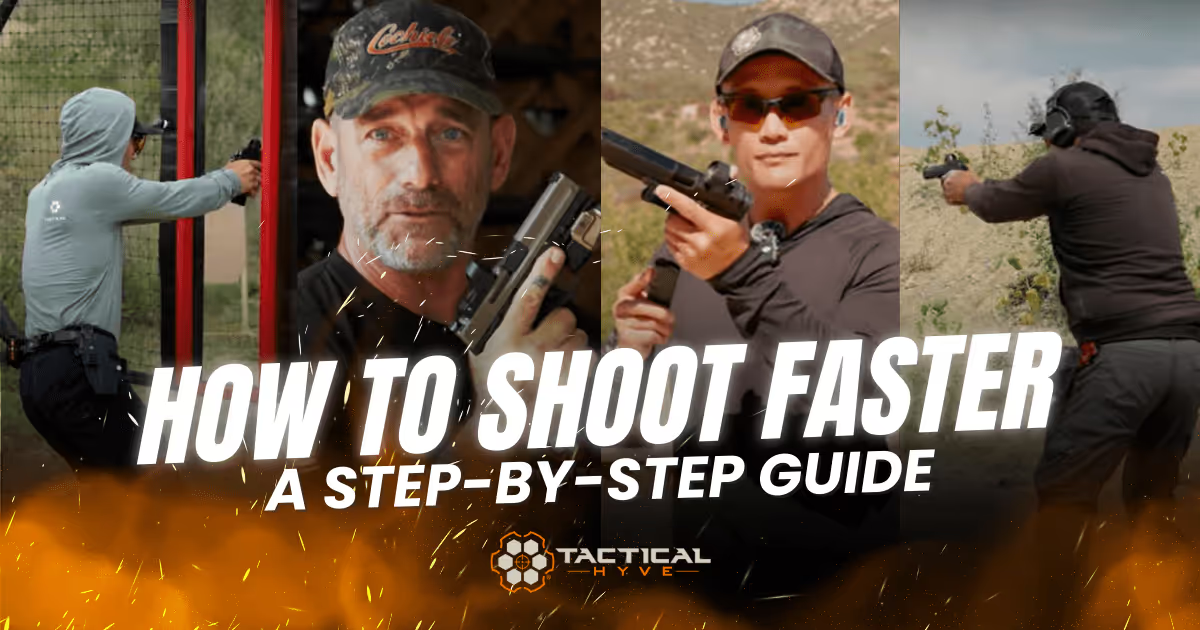
We created a detailed educational guide hosted on Tactical Hyve titled:
“How to Shoot Faster, The Right Way: A Step by Step Guide”
The guide addressed a real performance problem. It delivered legitimate shooting instruction. It explained mechanics, sequencing, and training concepts in a way that stood on its own.
DryFireMag was introduced naturally as a tool that supported those concepts. There was no hard sell. No pricing. No checkout.
The page itself sold nothing.
The Outcome Without Sharing Exact Numbers
While we cannot share precise metrics, the outcomes are clear.
Return on ad spend increased by approximately two and a half times compared to previous attempts that sent traffic directly to product pages.
Ad delivery stabilized. Rejections stopped. Traffic scaled predictably.
More importantly, the invisible sales letter generated leads.
Those leads were fed into an automated nurturing system we implemented called ReachFuel™. Prospects continued receiving educational content that reinforced the same messaging and positioning introduced in the guide.
Approximately nine percent of those prospects converted automatically without manual sales effort.
This is the compounding effect most firearms and tactical brands never experience because they stop at traffic.
Why Most Attempts Fail When Done Internally
Many businesses attempt something similar after hearing about content marketing or advertorial style strategies.
The problem is not the idea. The problem is execution.
An invisible sales letter must be structured intentionally. Topic selection, framing, sequencing, and positioning all matter. If any of those elements are off, the result is content that educates but does not convert.
That is often worse than doing nothing at all, because it creates the illusion of progress.
This is why many brands publish blogs for years without meaningful sales impact.
Yes, You Can Try This Yourself
You can attempt to create an invisible sales letter internally. Some businesses succeed.
Most do not, not because the strategy is flawed, but because incomplete execution produces incomplete results.
The cost of guessing is not just time. It is wasted traffic, wasted ad spend, and missed opportunities with qualified buyers.
The First Step: A Tactical Growth Track
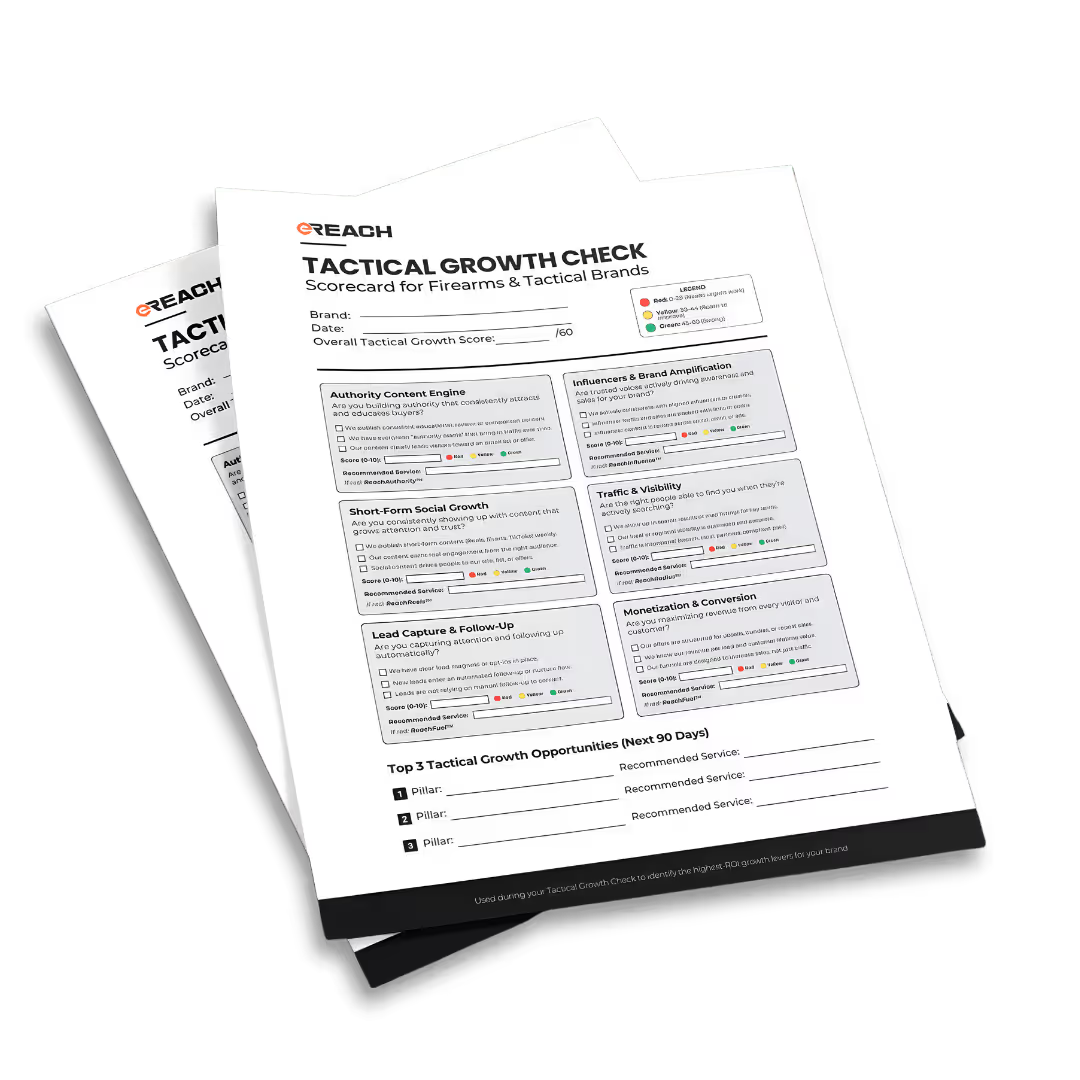
If you want to explore whether an invisible sales letter makes sense for your firearms or tactical business, the most efficient starting point is clarity.
We offer a free Tactical Growth Check designed to analyze your business, your constraints, and your traffic opportunities. The goal is not to sell you services. The goal is to determine whether this strategy fits your situation and where it would deliver the most leverage.
From there, you can decide whether to implement internally or work with professionals who have already solved these problems.
In Summary
The invisible sales letter has existed for decades. Only the platforms have changed.
Firearms and tactical brands that adapt to modern restrictions without abandoning proven persuasion principles are the ones that continue to grow.
The rest keep fighting the platform.
If you would like to explore the former path, the Tactical Growth Check is the place to start.


Let's Build Something That Actually Works
Work with a team that understands your industry, executes with precision, and delivers results that drive real revenue.
.png)


Contact



San Diego, CA 92101